In yoga, prana means life force and ayama means extension. Pranayama is the practice of working consciously with the breath — and because the breath is closely linked to how we feel, a few minutes a day can make a noticeable difference to calm and concentration.
Practise on an empty stomach, sitting comfortably with a straight spine. Breathe through the nose unless instructed otherwise, and never strain.
1. Dirga Pranayama — three-part breath
Breathe in slowly, filling first the belly, then the ribs, then the upper chest. Exhale in reverse. This full, deep breath is the foundation of all other practices and a wonderful way to settle at the start of a class.
2. Nadi Shodhana — alternate nostril breathing
Close the right nostril with the thumb and inhale through the left. Close the left with the ring finger, release the right and exhale. Inhale right, switch, exhale left. That is one round; practise five to ten. Many people find it balancing and calming before meditation.
3. Ujjayi — the ocean breath
Slightly narrow the back of the throat so the breath makes a soft, steady sound, like distant waves. Ujjayi is often used during asana practice to keep the mind focused and the breath even.
4. Bhramari — humming bee breath
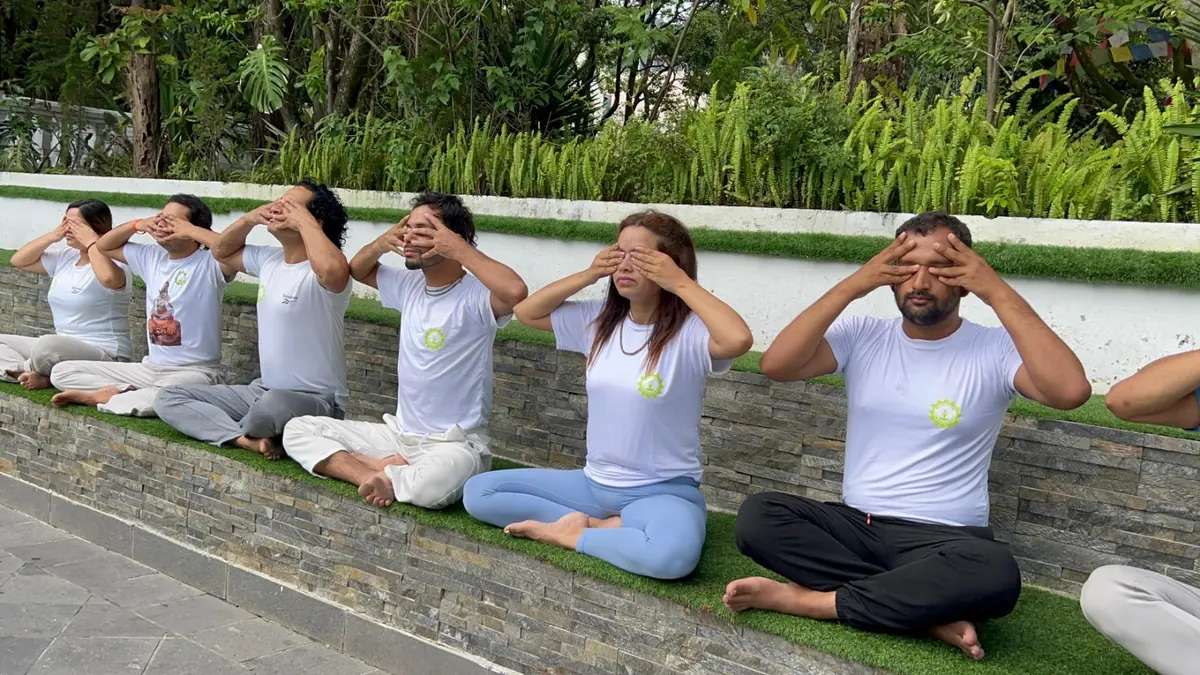
Close the eyes, inhale, and as you exhale make a gentle humming sound like a bee. Feel the vibration in the face and head. Five to seven rounds is a simple way to unwind in the evening.
5. Kapalabhati — skull-shining breath
A series of short, active exhalations through the nose, drawing the belly in sharply, with passive inhalations. Start with 20 to 30 breaths and rest between rounds. Kapalabhati is energising — best learned with a teacher, and not recommended during pregnancy or with high blood pressure, heart conditions or recent abdominal surgery.
Make it a habit
Choose one or two practices and do them every morning for a week. Notice how you feel before and after. Small, consistent practice is far more powerful than occasional long sessions.
Pranayama and meditation are part of every program at our school — see the full list of programs.