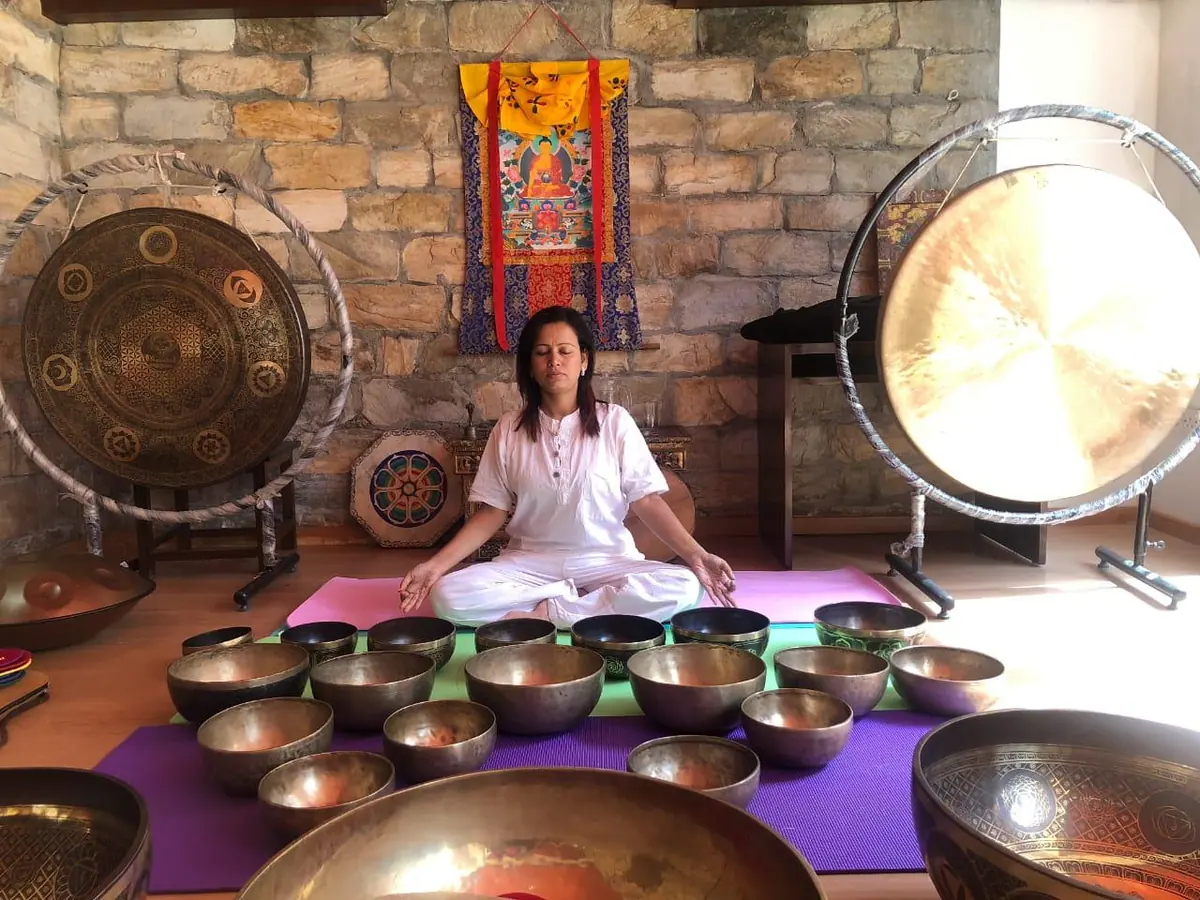
Walk into a sound healing session and the first thing you notice is the sound itself: long, layered tones that seem to hang in the air and move through the body. Himalayan singing bowls are traditionally made from a blend of metals and have long been used in the Himalayan region as an aid to meditation and relaxation.
How does a session work?
You usually lie down or sit comfortably while the practitioner plays bowls around you — and sometimes places them gently on the body. The bowl is struck or circled with a wooden mallet, producing a rich tone and vibration. Many people find that focusing on the sound quiets the busy mind, slows the breath and brings a deep sense of rest.
What does it feel like?
Everyone’s experience is different. People often describe a feeling of warmth or gentle vibration, deep relaxation, or simply the most peaceful hour of their week. Some fall asleep; others feel clear and energised afterwards.
Learning to play
Playing a bowl well is a skill: striking with the right strength, circling the rim to make it “sing”, and combining bowls of different notes. A structured course teaches you:
- The history and types of Himalayan singing bowls
- Striking and rimming techniques
- How to guide a relaxation session for yourself and others
- Combining sound with breath and meditation
Who is it for?
Singing bowl training is open to complete beginners as well as yoga teachers, Reiki practitioners, massage therapists and anyone working in wellbeing who wants to add sound to their practice.
Sound healing is a complementary practice for relaxation and wellbeing. It is not a substitute for medical treatment.
Curious to learn? Explore our Singing Bowl Training courses — Basic, Advanced and Super Advanced.